Newly Commissioned Poem Finds a Home

Jennifer Hambrick reads her commissioned poem at VIVO Music Festival Columbus Museum of Art
Poet Jennifer Hambrick reads her poem “on a cold sea we travel,” commissioned by the VIVO Music Festival, at the Columbus Museum of Art, Aug. 31, 2017.  Pictured L to R: VIVO Music Festival co-artistic director and violist John Stulz, violist Matthew Lipman, Jennifer Hambrick, VIVO Music Festival executive director Ted Ou-Yang. (Photo courtesy of VIVO Music Festival)

Last Thursday, I had the unique honor to read my poem “on a cold sea we travel,” commissioned by the VIVO Music Festival, as a preface to a performance of Arnold Schoenberg’s pivotal chamber music work Verklärte Nacht (Transfigured Night) in the festival’s concert “VIVO Transfigured” at the Columbus Museum of Art.

Receiving the commission to write the poem and having the opportunity to read it aloud in a resplendent venue were incredibly special. But beyond that? I tend to think of my poems as my children and, like any good literary parent, to want them to thrive and eventually settle down in the pages of a nice literary journal. So I found myself wondering, what next? for this poem, which was invited and welcomed so warmly into the world.

I am delighted that “on a cold sea we travel” has been accepted for publication in the fabulous literary journal The Main Street Rag, where it will eventually take up residence among poems by other serious writers. My poem has found a home. A good one.

And now I can’t help but dream that “on a cold sea we travel” might be read aloud as the preface to other performances of Verklärte Nacht, once the poem has been published.

My undying thanks to VIVO Music Festival co-artistic directors John Stulz and Siwoo Kim for coming up with the brilliant idea to ask a poet to transfigure Transfigured Night. I’m humbled that they chose me for the task. They share top billing for the success of “on a cold sea we travel.”

Newly Commissioned Poem Transfigures Arnold Schoenberg’s Pivotal Chamber Music Work “Transfigured Night”

VIVO photo Derby Court CMA
VIVO Music Festival 2016 at the Columbus Museum of Art, Derby Court (Photo: Courtesy of the VIVO Music Festival)

I am greatly honored to have received a commission from the VIVO Music Festival to write a poem in response to Arnold Schoenberg’s pivotal string sextet Verklärte Nacht (Transfigured Night), and to present my new poem in its world-premiere reading Thursday evening at the Columbus Museum of Art.

Under the creative leadership of its founders and co-artistic directors Siwoo Kim and John Stulz, the VIVO Music Festival brings world-class musicians to Columbus, Ohio, for one week each summer for performances of great chamber music repertory in venues all around the city. In its third season, the 2017 festival will feature Schoenberg’s Verklärte Nacht Thurs., Aug. 31 at 7 p.m. in the Columbus Museum of Art’s Derby Court.

In keeping with the theme of Thursday’s concert – “VIVO Transfigured” – Stulz asked me to write a poem that would respond to Schoenberg’s Verklärte Nacht and also update the poem of the same title by German poet Richard Dehmel that inspired Schoenberg’s work – in short, to transfigure Transfigured Night.

The task of composing my new poem was exciting and daunting. Delving into and gleaning inspiration from the rich philosophical and cultural contexts in which Dehmel and Schoenberg worked was exhilarating. At the same time, in fulfilling the commission, I was fully aware that my new poem would become, if only in a small way, still nothing less than a part of the history of Schoenberg’s Verklärte Nacht.

I will present my new poem “on a cold sea we travel” in its world-premiere reading at Thursday’s concert, as an introduction to the musicians’ performance of Schoenberg’s work. The reading and the performance will be live streamed on Facebook.

My hope is that, when heard before Schoenberg’s Verklärte Nacht, “on a cold sea we travel” will set the stage for experiencing the philosophical and sonic richness of Schoenberg’s music in a uniquely musical way. I took the idea of traveling on a cold sea as much from my experience of hearing Schoenberg’s Verklärte Nacht, with its dramatic waves of sound in continuous ebb and flow, as from the particular line in Dehmel’s poem that the title of my poem paraphrases. In an effort to preserve the essential philosophical resonances of Dehmel’s poem, in “on a cold sea we travel” I have aimed to convey an apotheosis that is truly universal – shared by poet and all who experience the poem. I’ve also conceived the surface music of the poem – the alliteration, assonance, and rhythms of the words – to serve as a special kind of gateway into listeners’ experience of Schoenberg’s work.

My extreme gratitude to John Stulz, Siwoo Kim, and the VIVO Music Festival for this singular honor, and to the Ohio Arts Council for funding in support of the commission.

Haiga Wins “Haiku Master of the Week” Honor from Japan’s NHK WORLD TV

Jennifer Hambrick - alone
Photo and poem © Jennifer Hambrick. All rights reserved.

A couple of weeks ago, I created my very first haiga – haiku plus visual art in symbiotic relationship. Today, it became a media celebrity.

This morning, I was named Haiku Master of the Week on the NHK WORLD TV (Japan Broadcasting Corporation) series Haiku Masters for my haiga “alone,” shown above. You can watch the mini-episode of Haiku Masters which aired on NHK TV this morning at this link.

Two of the hosts and judges of Haiku Masters wrote some thoughtful comments about my haiga, which was selected in a process of blind judging.

“One of the most important points of this piece is how although the narrator may be looking outside, he or see seems to be more focused on an inner dialogue. […] Furthermore, the word placement on the photo is wonderful, as isolating the word ‘alone’ increases the sentiment of loneliness,” wrote Japanese haiku poet Kazuko Nishimura.

“What exactly is the space between raindrops, we wonder, and imagine what thoughts slip in between,” wrote the American-born poet and photographer Kit Pancoast Nagamura. Read the judges’ full comments here.

I wish to congratulate this week’s runners-up – Joelle Ginoux-Duvivier (France) and Kanchan Chatterjee (India) and to thank Ms. Nishimura and Ms. Pancoast Nagamura for seeing something meaningful in my work amidst a pool of thousands of submissions worldwide. I am delighted and humbled by this honor.

Poetry Radio Program Wins International Award

cover
Photo: Jennifer Hambrick

Doing something you love is its own reward. But that reward is always sweeter when others recognize the value of your contribution.

I was notified recently that a poetry reading and roundtable conversation radio program I produced and hosted in April 2016 received an Honorable Mention in the 2016 International Association of Audio Information Services (IAAIS) Awards. This project combined two things I love: the power of poetry to move and inspire, and the power of radio to reach people where and when they least expect it.

For the program, which I produced for broadcast on the “Morning Exchange” program on VOICEcorps, the audio reading service for the vision impaired community in Columbus, Ohio, I invited three other poets from around Ohio to share a few of their poems and talk about how they were bitten by the poetry bug. I and fellow Ohio poets Sayuri Ayers, Mark Sebastian Jordan and Kathleen Burgess recorded the one-hour program at the VOICEcorps studios for broadcast during April 2016 – National Poetry Month.

Here is the audio (unedited) of the April 2016 poetry program.  I am grateful to Sayuri, Mark and Kathleen for granting me permission to share their poetry on this platform.

Poem Receives Award in Montenegrin International Haiku Competition

Andrey photo of Ulcinj, Montenegro
Photo: Andrey (Creative Commons/Flickr)

It was announced recently that one of my haiku received a merit award in the first Montenegrin Haiku Festival Competition – Nature in My Eye.

My poem was one of 20 haiku named among the winners in the competition, in which 167 authors from 31 countries entered a total of 835 poems.  I am honored and humbled to be in the company of some great haikuists, whose work I look forward to reading in the festival anthology.

The festival will take place August 25-27 in beautiful Montenegro.

Congratulations to all of the winners, and my sincere gratitude to the contest judges.

Celebrating ‘The Cherita’ with a New Poetry Journal

The Cherita inaugural issue cover
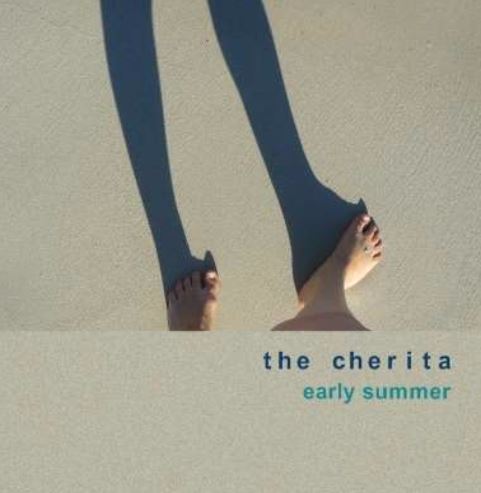
Cover of the inaugural issue of The Cherita (June 2017)

It’s always exciting to get in on the ground of floor of a new enterprise.  Today, one of my poems did just that.

I am thrilled and humbled that one of my poems was published today in the inaugural issue of the international poetry journal The Cherita.

The Malayan poet ai li created the poetic form of the cherita in 1997.  The word “cherita” means “story” in Malay.  ai li’s three-line cherita form encourages the telling of tales in deft, imagistic language that guides the reader through narratives that gain momentum with each stanza.

This month, the cherita form turns 20, and to celebrate, it gets its own journal, co-edited by ai li and American poet Larry Kimmel.  The inaugural issue showcases each cherita on its own page, and illustrates each poem with a vivid photograph related to the poem’s story.  The final product is a feast of written and visual images.

View here the beautiful flipbook of the inaugural issue of The Cherita.

ai li and Larry Kimmel have selected a number of my cheritas for publication in the next several issues of their journal.  I am honored, and I’m eager to read more moving and inspiring stories in the issues to come.

Hot Honeymoon Haiku Published in The Asahi Shimbun

Doug Kerr Charleston photo Creative Comons Flickr
Charleston, South Carolina.  Photo: Doug Kerr (Creative Commons/Flickr)

We were happy. And at the same time, we were wrecked.

Fifteen years ago, my then brand-new husband and I were walking around beautiful Charleston, South Carolina, on our honeymoon hot and wilted. All the hype and hoopla of our wedding the day before had taken the starch out of us, so we just thought we were dragging from plain old exhaustion.

But we learned later that day the we had actually been walking around Charleston in 104-degree heat.  And, given that this was June in Charleston, heaven only knows what the humidity was.

But though we were wrecked, we were happy.

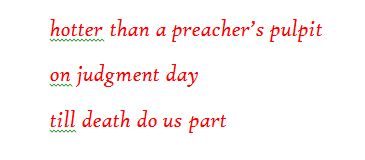
So, on June 2, the fifteenth anniversary of that sweltering day, it was a delight to see my haiku inspired by our honeymoon published in Japan’s leading daily newspaper, The Asahi Shimbun, in a special column devoted to honeymoons.  My sincere thanks to editor David McMurray.  Here is my haiku:

Hambrick preacher's pulpit haiku


My “Paper Roses” Haiku and the Story of the Very Special Artwork That Inspired It

I love it when a project of unassuming origins takes on a life of its own.

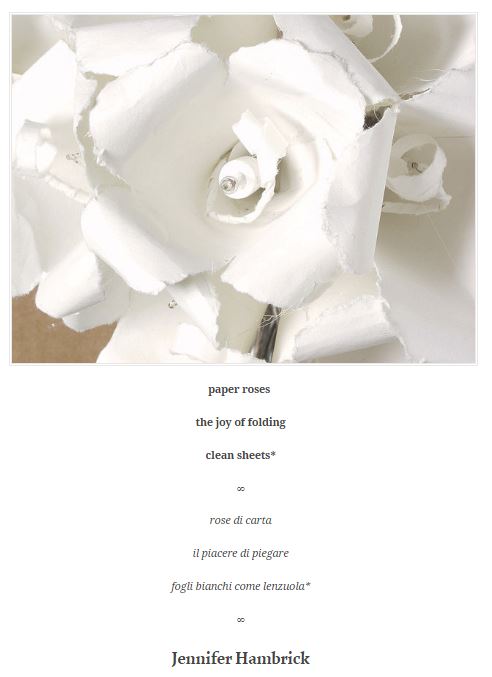
My “paper roses” haiku, which the Italian haiku poet Elisa Allo recently featured and translated into Italian on her blog, Ama no gawa, recently found itself in the middle of such a project.  Little did I know that my haiku contains a pun that is impossible to translate into Italian.  Elisa presented the haiku with a beautiful graphic and an explanatory note about the translation:

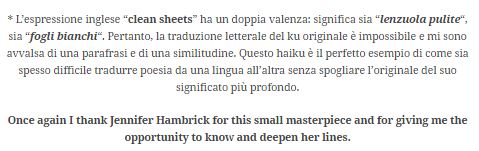
Hambrick Paper roses haiku - 1


Hambrick Paper roses haiku - 2

My “paper roses” haiku might not have come about in the first place had it not been for the phenomenal artwork a group of Columbus-area elementary school students and a recent event of the Ohio Poetry Association.

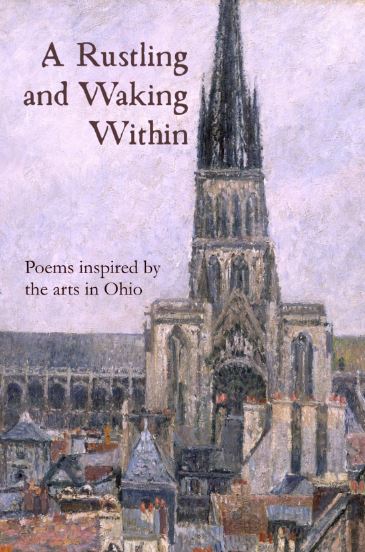
In April, the Ohio Poetry Association published a statewide anthology of ekphrastic poems (poems inspired by other works of art), A Rustling and Waking Within.  The anthology was a project many years in the making and was guided into the world with selfless love and generosity by editor Sharon Fish Mooney.

A Rustling and Waking Within cover

The anthology launch party last month at Columbus’ Wexner Center for the Arts (“the Wex”) featured poets, including myself, from all around Ohio reading aloud poems in the anthology.

In the run-up to the event, I volunteered to acquire flowers to adorn the small reception tables where poets would gather to nosh and sip before and after the readings.  Unable to secure a donation of real flowers, I turned to Plan B: paper flowers.

I asked one of my co-workers if her husband, an elementary school art teacher, might think it a good project for some of his art students to make a few dozen paper flowers for the anthology launch party.  It just so happened that one of his classes of third graders loves to do origami – so much so that their teacher often has to collect any artwork they create on paper right after they finish it, lest they fold it into something else!

Moreover, my colleague’s husband knew just the right pattern for paper flowers, one which he himself made many times and sold at modest cost.  Over the next few weeks, Jon Juravich, the art teacher at Liberty Tree Elementary School in Powell, Ohio, led his students in making three dozen paper flowers, which they then donated to the Ohio Poetry Association for use at the anthology launch party.  As you can see from the photo Jon took, the students’ work is simply gorgeous.

Jon Juravich student paper flowers
Paper flowers made by the third grade art students of Jon Juravich at Liberty Tree Elementary School, Powell, Ohio.  Photo by Jon Juravich

But the final presentation was stunning.  Jon hot glued the paper “blooms” onto tree twigs he had painted black.  I placed one  or two stems into each of several tall bud vases and placed a vase on each of the small tables at the Wex.  Quite simply, the students’ flowers were a hit.

At the anthology launch, I asked OPA president Chuck Salmons and other organizers of the event to sign a thank-you card for Jon and his students.  For my part, I wrote an original haiku – my “paper roses” haiku, which Elisa Allo later featured and translated into Italian – inspired by the students’ phenomenal paper flowers.  Jon shared the thank-yous, kudos, and haiku to his students.

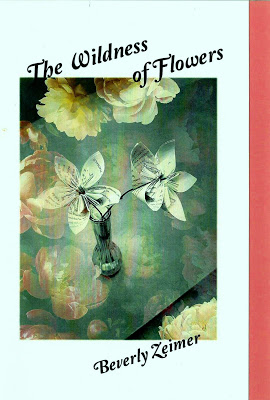
Fast-forward to April 30, when the Ohio poet Beverly Zeimer’s chapbook the Wildness of Flowers was published by the Cleveland-area publisher NightBallet Press.

Beverly Ziemer chapbook cover
Photo by Dianne Borsenik, with Photo Lab PRO

On the cover of Beverly’s chapbook, in the center of a swirl of gardenia blossoms, is a picture of one of the vases of the Powell students’ paper roses sitting on one of the tables at the OPA anthology launch party.

So, finding flowers (or rather failing to find flowers) for a major poetry event inspired a creative project for some talented third-graders, which both turned into a haiku inspired by the paper flowers they made and which is now translated into a foreign language on a blog an ocean away, and became cover art for a poet’s chapbook published right here in Ohio.

Somewhere in this story is a lesson about synchronicity.  But here’s the most powerful lesson: positive energy begets positive energy, and the creative spirit, when embraced, nurtured, and loved, cannot be stopped.

I thank Elisa Allo for welcoming my “paper roses” so beautifully into the world, and I thank Jon Juravich and the third grade art students at Liberty Tree Elementary School for their talent, generosity, and inspiration.

“Stiletto heel” Haiku Published in The Mainichi (The Daily News – Japan)

The Mainichi imageWhat a pleasant surprise!

I  just discovered quite at random that one of my haiku was published recently in the major Japanese newspaper The Mainichi (The Daily News).

Here is my poem:

Hambrick stiletto heel haiku The Mainichi 18 April 2017

My thanks to editor Isamu Hashimoto for selecting my work. I am greatly honored.


My Poetry Guardian Angel

El Ángel Exterminador / The Exterminating Angel

Photo: Andrés Suárez García (Creative Commons/Flickr)

I’d like to share with you the story about the very first time I read one of my poems in public. It’s a story that in ways big and small changed my life, and I think it has the power to change other lives, too – maybe even yours.

The Notebook

I started writing poetry in early 2011, not really by choice, but out of necessity.  At that time, I had been doing a lot of professional media writing and had been thinking about an idea for a novel I had come up with, and which I still hope someday to write. But when I write longer-form fiction, I like to have a stretch of two or three hours available to devote to it, a luxury that my full-time job and my rich and varied personal life did not and still does not allow.

So I did the next best thing. I started carrying around a little pocket-sized notebook, and whenever I had an idea for a plot twist or character trait or a scene in the novel-to-be, I jotted it down in the notebook.

In early 2011, I went through a bout of insomnia, in which I would wake up in the wee hours of the morning with, of all things, lines of text running through my mind – colorful turns of phrase, not necessarily complete sentences. But I remember thinking that these orphan lines, if you will, were actually fairly intriguing. Each time I awoke with one in my mind, I willed myself not to forget it by the time I actually got out of bed to start the day. But that effort only kept me from going to sleep. And inevitably I would still forget the line of text that had come to me out of nowhere.

Novel Ideas

I assumed that the lines of text that were finding their ways into my brain were somehow related to the novel I was then trying to conceive. So after a few of these insomnia incidents, I decided to put my little notebook on my bedside table. If more of these overnight insights woke me up, I could grab the notebook and jot them down, thereby getting them out of my mind so I could get back to sleep without fear of losing the ideas entirely.

That same night, I had a chance to put the procedure in action. The text-spirits woke me around 2 a.m., and I grabbed my notebook and started writing down what my intuition had coughed up. But instead of coming out in lines across the full width of the page, as in prose, the words came out in a long and skinny strip of short lines vertically down the page. When I stopped writing, I held the notebook arm’s length away. Hmm. Looks like a poem, I thought. Then I read what I had written, and I remember thinking, I don’t know if it’s a good poem, but, from a writer’s perspective, broadly construed, I don’t think it’s a bad piece of writing.

For the next few weeks I kept writing long, skinny things in my notebook. Then I owned up to myself that I was trying to write poems. Then I checked out a couple of good books on writing poetry and tried my hand at the writing exercises in them. After about a moth, I had a dozen or so long, skinny things – uh, poems – in my notebook.

“Don’t Compare Yourself”

In hindsight, what I did next was foolhardy or brave or both, which might be why my poetry guardian chose to enter at this particular moment. On a whim, I decided to read one of the new poems in my little notebook in the open mic at the The Poetry Forum, a long-standing and highly respected poetry reading series in Columbus that, at the time, met every Monday evening at a bar near the Ohio State University campus.

I showed up for the Monday-evening gathering. All the seats at tables were taken, and there was only one seat left seat at the bar, so I took it. The gentleman seated on my left was wearing a red satin baseball jacket and a dark blue baseball cap. He said hello.

“Are you a poet?” he asked.

“No, not really, but I brought a poem that I might read at the open mic, just to see what happens,” I said.

“Oh, you’d better sign up. The open mic fills up fast.” He gestured across the room. “There’s a sign-up sheet over there.”

I thanked him, crossed the room, signed up, and returned to my seat at the bar.

With each of the featured reader’s fantabulous poems, I felt more and more like throwing up or running away.

“Pretty good, huh?” my bar friend said to me during the intermission between the featured poet’s sets.

“Yes,” I said. “Absolutely. You know, um, maybe I’ll save that open mic thing for another time.”

What my new friend said next changed my life completely.

“Don’t judge. Don’t compare yourself with anyone. Just read what you have to read.”

How could I argue? “Um, okay,” I said.

“Write more poems like that”

The featured poet read his second set, then the first few poets on the open mic list read their poems, then the MC called my name. I walked onto the stage. Stage lights blackened out everyone in the audience, including the featured poet, who was sitting at the first table away from the stage. I spoke into the void.

“This is my first time reading at the Poetry Forum, and the poem I’m going to read is the first poem I’ve ever written. It’s called ‘Sacrifice.’”

I read the poem. “Jeez,” I heard the featured poet say. People clapped. Through my nerves, I managed to find enough strength and stability in my legs to step down from the stage and return to my place at the bar. “Nice job,” my bar friend said.

After the open mic ended, I thanked the MC, a long-time college English professor. “Write more poems like that,” he told me.

So I did. And I still do, except that the poems I’m writing now are better than that first poem, because I’ve been writing poems longer now than I had been when I first started, which I realize is a goofy thing to write, but I needed to write it in order to make a point:

What if my poetry guardian angel had not been at The Poetry Forum that night and sitting next to the only seat available for me to sit in? What if the person on my left at the bar had been someone who didn’t know to tell me to sign up early for the open mic? And here’s the biggie: What if that person had not told me to stop comparing myself negatively with other people, had not told me just to share what I have to offer, had not encouraged me to make my voice heard?

Would I still be writing poetry today, if my poetry guardian angel had not been with me when I needed him most? Maybe, maybe not. But that he did appear when I needed him, and that he did encourage me when I wanted to run away, definitely did give me the intestinal fortitude to step outside my comfort zone and into the realm of possibility.

After thanking the MC, I went back to my seat at the bar to put on my coat to leave. My poetry guardian angel had already left. And even though I have returned to readings at The Poetry Forum and was actually invited to give a featured reading there a few years ago, I’ve never seen my guardian angel again. But when I’m feeling deflated about my writing, or anything else for that matter, I remember what this wise stranger in the red baseball jacket told me: Don’t judge. Don’t compare yourself with anyone.

Just be you. And write.