International Women’s Haiku Festival: Haiku by Nicholas Klacsanzky

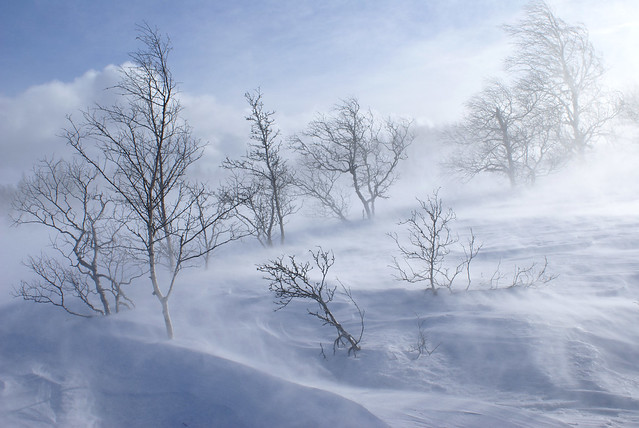
On a windy day 1

Photo: Randi Hausken/Creative Commons/Flickr

Enjoy Nicholas Klacsanzky’s heartwarming haiku about his younger sister in today’s feature of the International Women’s Haiku Festival.

winter wind . . .
singing my little sister
to sleep

Klacsanzky captures a special sibling moment in all its beautiful simplicity.  The juxtaposition of the cold “winter wind” with the emotional warmth of the voice singing the lullaby is beyond delightful.  One can imagine this sweet moment to have been comforting for the little sister and life-changing for the older brother.  And the music of Klacsanzky’s words – the alliteration of “winter wind” and “singing my little sister to sleep” – turns the poem into a lullaby in its own right.

Nicholas Klacsanzky is a widely-published haiku, senryu, and tanka poet, and a technical editor by profession.  The editor of Haiku Commentary, he wants to promote haiku as an educational study.  He was conferred with a certificate for being one of the top 100 haiku poets in Europe in 2015 and 2016. In addition, he is a mentor for haiku, senryu, and tanka on the online group Poets on Google Plus.  He lives in Kyiv, Ukraine.

International Women’s Haiku Festival: Poems by Michelle Schaefer

why is the sky blue?

Photo: Optick/Creative Commons/Flickr

Michelle Schaefer writes of lace and sea glass in today’s feature of the International Women’s Haiku Festival.

sea glass
I find myself
piece by piece

With its sharp edges worn smooth by the tumult of the ocean, “sea glass” is a beautiful metaphor for what, ideally, happens to us over the course of our lives.  The self-possessed older woman who embodies that special kind of ease in her own skin didn’t necessarily get there easily or overnight.  She likely had to comb a lot of beaches and pick up loads of flotsam and jetsam before finding the lovely sea-gems that sit well in her soul.  Schaefer’s poem gives us a road map – let the ocean of life smooth out our rough edges – and reveals the wabi-sabi kind of beauty of the works-in-progress that we are.

***

the edge of lace
no
still means no

The classic decoration for women’s undergarments, lace is a vivid signifier of feminine sexual intimacy.  Intriguingly, “the edge of lace” is serrated like a knife blade and, in Schaefer’s poem, suggests a protective boundary or even a weapon against sexual violence.  The lace metaphor here is an extraordinary symbol of a woman’s right to autonomy and a reminder of boundaries that are not to be transgressed.

Michelle Schaefer is a poet-in-progress.  She has spent many years learning and writing the art form of haiku.  She has been published in various haiku journals and anthologies.  Her poetry can be found in Acorn, Frogpond, Modern Haiku, Mariposa and Heron’s Nest.  She is also featured in NY Seitkatsu’s online publication as a regular semifinalist in the Ito En Haiku Grand Prix.  She has recently won Frogpond‘s Museum of Haiku Literature Award in its most recent volume.  She hopes that poetry touches people in extraordinary ways.  She lives in Bothell, WA with her husband.

International Women’s Haiku Festival: Haiku by Debbi Antebi

Moonflower, illuminated by the moon

Photo: Mike Lewinski/Creative Commons/Flickr

Debbi Antebi writes about moonflowers and our mothers’ dreams in today’s feature of the International Women’s Haiku Festival.

moonflowers
mother opens up
about her dreams

Because it happens so often, a woman’s setting her dreams aside to nurture other people has become almost a cliché.  The ethereal image of the night-blooming moonflower imbues the mother’s inner awakening – under cover of darkness – with hope.  Maybe it’s not too late for her to rekindle those old passions, to tap into her unique potential, and to nurture the pars of herself that have for so long been eclipsed.

Debbi Antebi (@debbisland) lives in London, UK, with her beloved husband and books.  Her work has been featured in magazines and journals around the world.  An award winning poet and a member of the British Haiku Society, she exhales oxygen while writing poems.

International Women’s Haiku Festival: Poems by Amy Losak

Peel

Photo: Scott Robinson/Creative Commons/Flickr

Amy Losak explores the plight of the older woman in the workplace in today’s feature of the International Women’s Haiku Festival.

millennial workplace
the boomer colors her gray
more often

Western culture’s obsession with youth is in part responsible for making aging more spiritually difficult than it needs to be.  And even though millennials have a bit of a PR problem when it comes to common (mis?)perceptions of their work ethic, younger workers still seem more highly valued than older ones.  Raise all of this to the third or fourth power when it comes to women, in particular.  Losak’s “boomer” –  who can hope only to erase with the dye bottle the effects of the years because the years themselves won’t come off – is a sympathetic character who speaks for many.

***

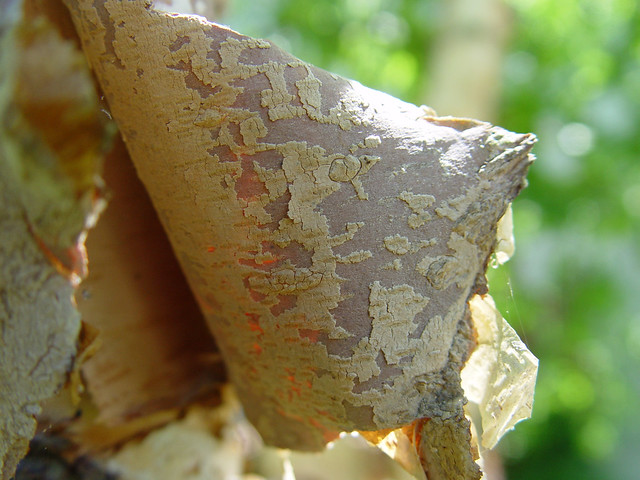
peeling tree bark
she hides her spotted hands
in the interview

Losak’s haiku paints a picture of an aging woman’s subtle act of desperation.  Surely the spots on the hands are not the only clues about the woman’s age, but they might be the only clues the woman thinks she can hide from those who hold in their hands the fate of her livelihood.

Amy Losak, of Teaneck, NJ, is a public relations professional.  She recently started writing haiku and senryu in honor of her late mother, Sydell Rosenberg, a charter member of the Haiku Society of America in 1968 who published her work in journals and anthologies.

International Women’s Haiku Festival: Poems by Debbie Strange

edited_imagePhoto: Patrick Lentz/Creative Commons/Flickr

Canadian poet Debbie Strange sees strength in a cancer diagnosis and humor in a pair of skinny jeans in today’s feature in the International Women’s Haiku Festival.

cirrus clouds . . .
she donates hair
before chemo

Debbie Strange turns those wispy clouds that look like pony tails into locks of hair on the stylist’s floor.  The woman in this haiku is a picture of proactivity, strength, and generosity in the face of possible death, embracing her diagnosis with eyes and heart wide open.

***

laundry day . . .
my skinny jeans
fat with wind

It’s not enough that the thought of wearing skinny jeans strikes fear and dread in the hearts of some; the wind has to rub it in.  The image of the puffed-up skinny jeans pokes fun at our warped obsession with weight and body image, leaving us to laugh at how quickly we abandon more noble constructs of authentic beauty, and thus the paths to true contentment, in the pursuit of pretty packaging.

Debbie Strange‘s creative pursuits bring her closer to understanding the world and herself. She is an award-winning Canadian short form poet, haiga artist, and photographer. Debbie is the author of Warp and Weft, Tanka Threads (Keibooks 2015) and A Year Unfolding (Folded Word 2017). You are invited to visit her @Debbie_Strange.

International Women’s Haiku Festival: Poems by Marietta McGregor

moods of a rose-luminous

Photo: Leslie Main-Johnson/Creative Commons/Flickr

Marietta McGregor’s haiku are full of unfolding roses and spidery script in today’s feature of the International Women’s Haiku Festival.

unfolding rose…
i stroke her hand
around the cannula

The paradox of the unfolding rose is that, as vibrant and beautiful as it is, it is also in the process of dying.  This haiku is full of life and death, of the frailty of the flesh and of the love that sustains us through all trials, connecting us even across the divide.

***

attic spring-clean…
her spidery script
a brittle scorecard

The spiders that we imagine are uncovered in the “attic spring-clean” and the “spidery script” on old items convey a masterfully subtle relational discomfort.  And all of it packed away in the attic, hidden in the remote recesses of the private realm, suspended in a web of unease.

Marietta McGregor is a Tasmanian botanist and journalist who lives in Canberra.  Her haiku, haibun, and haiga appear in international journals and anthologies, and have been featured on Japanese television.  She has gained poetry awards in Japan, the UK, the US, and Australia.  She belongs to the Australian Haiku Society, the Haiku Society of America, and the British Haiku Society.

International Women’s Haiku Festival: Poems by Lee Nash

moyan-brenn-iceland-creative-commons-flickr

Photo: Moyan Brenn/Creative Commons/Flickr

Two haiku by Lee Nash wear tight jeans and grandmother’s shawl in today’s feature of the International Women’s Haiku Festival.

under the folds
of my grandmother’s shawl
Northern Lights

I love the image of a grandchild, whether still young or grown up, burrowed beneath her grandmother’s crocheted or knitted shawl.  The child sees light – maybe even the light of a fire in the fireplace – refracted through the natural holes in the yarn’s colorful weave, thus her own personal Northern Lights display in the warmth and safety of the little world her grandmother created.  Such coziness across the generations.

***

bumble bee
in a flower tube
my jeans feel tight

The quirky image of a bumble bee trapped in a flower tube gives the familiar image of tight jeans an offbeat twist.  Nash puts herself into the poem with the first person possessive pronoun “my,” giving us the sense that she’s talking right to us, just as a girlfriend would after an ice cream binge.

Lee Nash lives in France and freelances as an editor and proofreader.  Her poems have appeared or are forthcoming in print and online journals in the UK, the US, and France, including Ambit; Angle; Ink, Sweat and Tears; Mezzo Cammin; Orbis; Poetry Salzburg Review; Sentinel Literary Quarterly; The French Literary Review; The Interpreter’s House; The Lake; and World Haiku Review. You can find a selection of Lee’s poems on her website: leenashpoetry.com.

Find more information about the International Women’s Haiku Festival and submit your work at this link.

International Women’s Haiku Festival: Poems by Stella Pierides

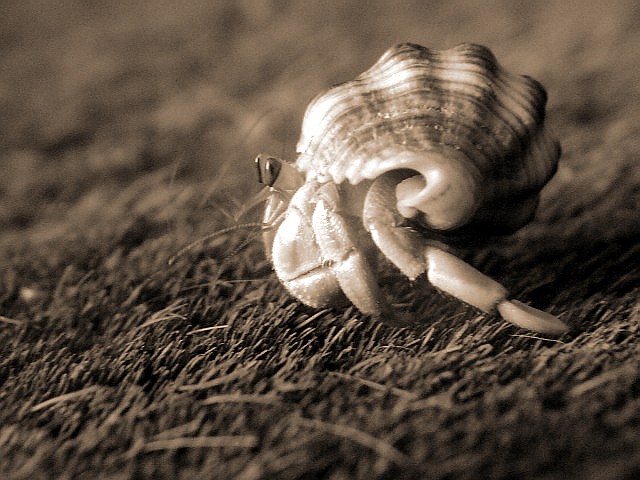
land hermit crab

Photo: Vanessa Pike-Russell/Creative Commons/Flickr

Laughing babies meet hermit crabs in two haiku by Stella Pierides in today’s feature of the International Women’s Haiku Festival.

juggling
a pen and a feeding spoon –
the baby’s laughter

This senryu captures a moment of the happy chaos babies bring with them everywhere.  The baby is probably laughing because he or she feels secure and happy in the presence of a familiar care taker.  But what about this whimsical possibility: The baby laughs along with us at the humorous image of the parent “juggling” pen and feeding spoon?  In any event, this laughing baby, like all laughing babies, gets the last laugh – from us.

***

hermit crab –
while ironing she dreams
of other lives

Confined to its shell, the hermit crab rarely, if ever, leaves its home.  What if the woman in this haiku could leave her shell and leave behind her domestic chores?  Would the “other lives” of which she dreams live up to her fantasies and justify sacrificing the security of her status quo?  Maybe what the woman really wishes for is simply to know she has the freedom to choose a different path and define herself anew.

Stella Pierides was born in Athens, Greece and now divides her time between Neusäss, Germany, and London, England.  She is the author of Of This World (Red Moon Press, 2017); In the Garden of Absence (Fruit Dove Press, 2012), for which she received a Haiku Society of America Merit Book Award; and Feeding the Doves (Fruit Dove Press, 2013), among others.  Stella serves on The Haiku Foundation board of directors and project manages the Per Diem: Daily Haiku feature for the Foundation. She enjoys reading, gardening, film, music, food, and working long hours.

Find more information about the International Women’s Haiku Festival and submit your work at this link.

International Women’s Haiku Festival: Poems by Martha Magenta

20150205_163920.jpg

Photo: Mo Barger/Creative Commons/Flickr

Martha Magenta turns mammogram shadows upside down and sees dignity in dementia in today’s feature of the International Women’s Haiku Festival.

mammogram
my shadow
leads the way

Shadows usually follow us, not lead us.  Magenta’s turning that truth on its head is wonderfully playful – or would be, if the shadow in question weren’t the shadow on the mammogram image that every woman dreads.

***

knitting a shawl
grandmother folds
into the fog

This poem is a rich and dignified picture of generational role reversal.  The verb “folds” so gently unites the knitting work-in-progress with the grandmother who is fading into the fog of sleepiness or dementia – or both.  Was it perhaps the grandmother who taught the poetic speaker to knit?  If so, then those stitches weave the speaker and the grandmother together through the DNA of a beautiful handicraft passed down through generations.

Martha Magenta lives in England, UK. Her poetry has appeared in The Reverie Journal, Cafe Aphra, and Beaux Cooper; her haiku and senryu have been published in Modern Haiku, Presence, and Chrysanthemum, among others; her tanka in The Bamboo Hut, and Ribbons. She is owner of POETS community on G+. She collects her published work on a blog: https://marthamagenta.com/.

Find more information about the International Women’s Haiku Festival and submit your work at this link.

International Women’s Haiku Festival: Poems by Michael Dylan Welch

Cedar Forest

Photo: Jerry Meaden/Creative Commons/Flickr

Michael Dylan Welch writes of cedars and doilies in today’s feature in the International Women’s Haiku Festival.

rust in the cedars –
we gather again
at her favourite spot

Whose favorite spot?  A grandmother’s?  A sister’s?  A friend’s?  We don’t know, but the “rust in the cedars” and the ritual (“again”) gathering suggest the remembrance of someone now gone.  This poem rings with music: The musical sibilants in the first line – “rust in the cedars” – open the poem with a reverential whispering.  The assonance of the hard G’s on both accented syllables in the second line – “we gather again” – is a gently percussive counterbalance to the hushed first line.  There seems to be a stillness at this gathering, a moment in which to contemplate the imponderable realities of interconnection and the cycle of life.

***

lazy day at granny’s –
the doily imprint
on my daughter’s cheek

There’s an entire world in the 11 words of this senryu.  This granny with her doilies – you can see her furniture, you can hear the creak of her floors.  And the filigreed imprint of the doily on the girl’s cheek connects the girl with that family home, a sanctuary of complete and total safety.  The assonance and swung rhythm of “lazy day” intertwines seamlessly with the alliteration of “day,” “doily,” and “daughter,” uniting musically the people, time, place, and mood of a moment of simple yet profound family joy.

Michael Dylan Welch recently served two terms as poet laureate for Redmond, Washington, where he also curates two poetry reading series and directs the annual Poets in the Park festival. He runs National Haiku Writing Month (www.nahaiwrimo.com), and is a director of the biennial Haiku North America conference. Michael’s haiku, tanka, longer poems, essays, and reviews have appeared in hundreds of journals and anthologies, and one of his translations appeared on the back of 150,000,000 U.S. postage stamps. His personal website is graceguts.com. Michael lives with his wife and two children in Sammamish, Washington.

Find more information about the International Women’s Haiku Festival and submit your work at this link.