International Women’s Haiku Festival: Haiku by Willie R. Bongcaron

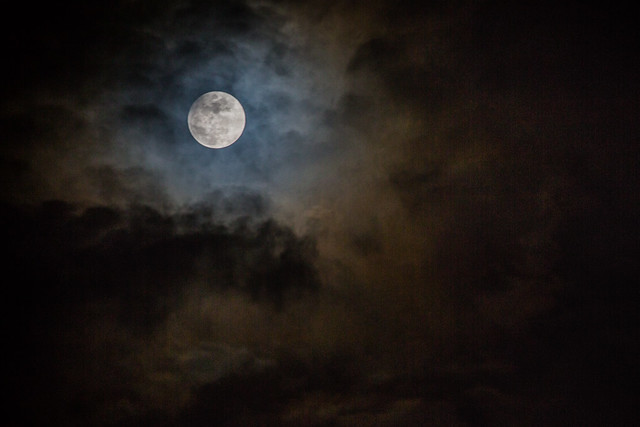
The moon

Photo: Laurie Shaull/Creative Commons/Flickr

The International Women’s Haiku Festival continues with a lovely haiku about solitude by Willie R. Bongcaron.

full moon
she stands alone
not so lonely

This poem gives graceful voice to a vexing issue.  Traditionally, women have been defined – and often still are defined – by their relationships with the men in their lives.  In the West, at least, daughters take their father’s last names, and traditionally, women take their husband’s last names.  When a woman is unattached, and in particular, not married to a man, does the world accept her as the complete human being she is, or does she tend to be viewed simply as someone who lacks a spouse?

In Bongcaron’s poem, the moon reflects the radiance of a woman comfortable in her solitude, a woman who stands on her own two feet, well at ease.

Willie Ropelos Bongcaron is a haijin by choice.  He has adopted a pen named AoSuzume, or the blue sparrow, with the help of Ms. Gabi Greve.  He is an adherent of short poetry forms like haiku, senryu, tanka, haiga, free verse, etc, but has been particularly addicted to haiku and senryu for 5 or more years now.  He resides in Sampaloc, Manila, the Philippines with his family; and is a government employee, having worked with the light rail transit system (LRTA) since 1985.

Find more information about the International Women’s Haiku Festival and submit your work at this link.

International Women’s Haiku Festival: Terri L. French

dark alley

Photo: Renee McGurk/Creative Commons/Flickr

Terri L. French talks homelessness, lip service, and tampons in today’s feature in the International Women’s Haiku Festival.

curses–
a homeless teen
stealing tampons

The Curse, that monthly guest, joins up with the dreaded curse of homelessness and all the woes that fly out from its Pandora’s box.  French captures the desperation of the impoverished young woman with a boldness and directness that hits you in the gut and makes you weep for the world.

***

lip service
her voice falling
on deaf ears

The phenomenon of what I call disenvoicement – the unjust silencing of an individual on real or perceived threat of devastating consequences for speaking out – is a sinister reality in the lives of women.  In so many ways a woman’s voice falls on “deaf ears” – the physically or emotionally abused woman or girl is afraid to speak out against her abuser, the professional woman is afraid to speak from her unique perspective in a meeting full of male colleagues, the silenced woman who, in some cultures, is viewed as a being without basic human dignity simply by virtue of her sex – the list goes on.  This tragedy plays out on the social and individual levels; how much worse off the world is when deprived of these voices!  French’s poem aptly gives voice to a grave wrong in women’s experience that has gone on far too long.

Terri L. French is a writer/editor and award winning haiku poet living in Huntsville, Alabama. She is past Southeast Coordinator of the Haiku Society of America, former editor of the senryu and kyoka journal Prune Juice, and current secretary for The Haiku Foundation.

Find more information about the International Women’s Haiku Festival and submit your work at this link.
International Women’s Haiku Festival: Haiku by John Hawkhead

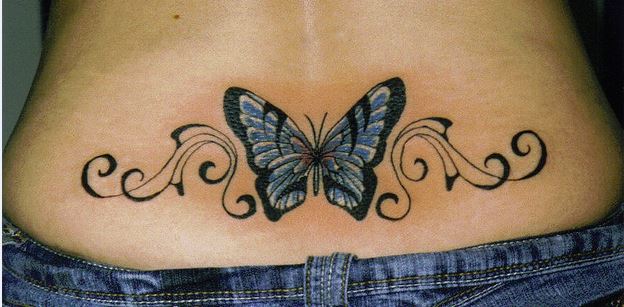
butterfly-tattoo-10-by-ilfrita-ilfi-creative-commons-flickr

Photo: Ilfrita Ilfi/Creative Commons/Flickr

British poet John Hawkhead talks tattoos and butterflies in today’s feature of the International Women’s Haiku Festival.

tattoo butterfly
fading into her wrinkles
wind through Autumn leaves

This poem tells so many life stories in just seventeen syllables.  But even juicier than the details Hawkhead gives us – the older woman, her butterfly tattoo – are the ones he leaves out: Where is that tattoo, and how large is it?  And that wind stirring the Autumn leaves – is it the tail wind in the wake of her hog?  Her significant other’s hog?  Her red Mustang?  Her self-assured gait?  Her wheelchair?  Her freedom is as enviable as it is colorful.  I want to meet this woman.  Some days, I even want to be her.

John Hawkhead is a writer an illustrator from the South West of the UK who is widely published in haiku and poetry magazines around the world. His book of haiku is available from http://www.albapublishing.com/. His Twitter account is at: https://twitter.com/HawkheadJohn.

Find more information about the International Women’s Haiku Festival and submit your work at this link.

International Women’s Haiku Festival: Poems by Roberta Beary

Lucky Strike

Photo: Scott Hudson/Creative Commons/Flickr

Roberta Beary gets real about marriage, divorce, and domestic violence in today’s feature of the International Women’s Haiku Festival.

relentless rain
the lengthening arc
of his fist

In this harrowing poem, Beary juxtaposes the relentless pounding of rain with an unthinkable, yet all too common, act of violence.

***

mother of the bride
dressed head to toe
in black

Beary’s poem recasts a wedding as a funeral and, in the poem’s gut-wrenching final line, enshrouds the mother of the bride – and by implication the bride herself – in the permanent darkness of the loss of life.

***

moving day
the kids pack up
my first marriage

Here, the home doesn’t just turn into an empty nest; it all but vanishes as material belongings, the absent spouse, and grown children pack up and move on.

Roberta Beary (USA and Ireland) is the 2017 Roving Ambassador for The Haiku Foundation and the haibun editor for Modern Haiku. She identifies as gender-expansive, and writes to connect with the disenfranchised, to let them know they are not alone. Her haiku collection The Unworn Necklace, named a William Carlos Williams finalist by the Poetry Society of America, is in its fourth printing. Her work is featured in A Companion to Poetic Genre (John Wiley & Sons, 2011) and Haiku In English: The First Hundred Years (W.W. Norton, 2013). Her book Deflection (Accents Publishing, 2015), a collection of haibun and haiku sequences on loss and grief, named an Eric Hoffer Book Award Finalist, received a Touchstone Award Honorable Mention and won a Haiku Society of America prize. Poet and playwright Grace Cavalieri says, “In Deflection she extends her reach with some of the most searingly truthful work I’ve seen this year.” Beary tweets her photoku on Twitter @shortpoemz.

Find more information about the International Women’s Haiku Festival and submit your work at this link.

International Women’s Haiku Festival: Poems by Anna Cates

mother-of-pearl-photo-from-creativie-commons-flickr

Photo: Rojer/Creative Commons/Flickr

Today the International Women’s Haiku Festival features poet Anna Cates. Two of her haiku are alive with flowers and sunlight, smooth pastels and mother of pearl.

lady’s mantle
the sunlight
on my shoulders

This poem renders a haiku moment in the most gracious and vivid terms.  You can almost see an impressionist painting: A woman sits next to a window or en plein air, summer sun warming her shoulders as he admires clusters of dainty lady’s mantle.  The woman enjoys sitting in the sun, while the lady’s mantle is content to wear its golden glow in the shade.  The woman and the flowers are twin sisters.

***

mother of pearl
still inside her shell
smooth pastels

How does the mollusk do it, create that iridescent, otherworldly mother of pearl?  All of that is going on inside the shell’s hard, creviced exterior.  It’s as though the sea creature, wary of leaving its shell and rendering itself unprotected, makes its own comfortable satin sheets.  This poem acknowledges the vulnerability that haunts every girl or woman who, at whatever stage of life, longs to leave her shell and put her mark on a man’s world.  But it also slyly suggests that maybe staying in the shell that she has, by her own talents, made so exquisite is okay, too.  The choice is hers.

Anna Cates lives in Ohio (USA) with her two cats and teaches English and education online. One hundred of her short form poems appear in the Living Haiku Anthology.

Find more information about the International Women’s Haiku Festival and submit your work at this link.

International Women’s Haiku Festival: Poems by Agnes Eva Savich

Summer Fades Away [244/366]

Photo: Tim Sackton/Creative Commons/Flickr

This month, in celebration of National Women’s History Month, Inner Voices is hosting the International Women’s Haiku Festival. Throughout the month of March, you will find here haiku about women, women’s experience, and women’s unique contributions, written by poets from around the world.

Launching the festival today are two haiku by Agnes Eva Savich.

rosy cheeks
she picks a fistful
of cherry tomatoes

This poem captures a double moment of joy: that of harvesting the juicy treasures of the vine, and that which the poetic speaker – perhaps in the role of mother or grandmother – experiences in watching the rosy-cheeked girl’s moment of discovery.  The mirror imagery of the rosy cheeks and the rosy roundness of the cherry tomatoes in the girl’s fist is delightful.

***

breast cancer
sprinklers on full blast
across a church lawn

Here, the “sprinklers on full blast” are a darkly clever amplification of a chemo drip.  That those sprinklers are flooding the lawn of a church emphasizes the depths of the fear that extends from the devastating diagnosis to the possibility that, in times of human desperation, even divine power has its limits.

Agnes Eva Savich lives near Austin, TX with her husband, two kids, and four cats. She has been writing poetry since she was 12. Her haiku are published in many modern haiku journals and have been translated into five languages. She has an early collection of poetry, The Watcher: Poems (Cedar Leaf Press, 2009) and is working on her first haiku collection.

Find more information about the International Women’s Haiku Festival and submit your work at this link.

‘Zucchini’ Haiku Named a ‘Judge’s Favorite’ in the 2017 Golden Haiku Contest, Washington, D.C.

Hambrick_zucchini_haikuI was delighted to learn that one of my haiku has been named a “Judge’s Favorite” among the six winners of this year’s Golden Haiku Contest, Washington, D.C.

This year’s contest garnered more than 1,000 entries, among them poems from the authors of the other six winning haiku – Terri L. French, Marek Kozubek, Trish Bright, Mark E. Brager, Sandip Chauhan, and Michele L. Harvey.

Aside from the numbers game, the judges of this year’s contest are some real haiku heavies, so I am quite honored that they found merit in my little poem.  My sincere thanks to the contest judges, Abigail Friedman, author of The Haiku Apprentice; John Stevenson, managing editor of the haiku journal The Heron’s Nest and author of several haiku collection; and NHK World’s Kit Pancoast Nagamura.

The other two haiku in my submission were also named runners-up in the contest.  Here they are:

my_haiku_runners_up
My haiku will be displayed on placards as in the image at top with the other contest winners and runners-up around Washington, D.C.’s Golden Triangle neighborhood, near the White House.

Public art exists to inspire others and bring meaning to people’s everyday lives.  I hope my “zucchini” haiku will bring lots of people joy.

Claudia Radmore’s Commentary on My ‘Flickering Thoughts’

photo_from-_creative_commons
Photo: Johanleijon/Creative Commons/Flickr

When you send art out into the world, it’s always fascinating to see how folks respond to it.

I had a lovely experience along these lines recently when the Canadian poet Claudia Radmore wrote to tell me that she had blogged about some poems, including one of mine, published in the most recent issue of Haiku Canada Review. In her post, “Enter the Frog, or Haiku from the Haiku Canada Review,” Radmore holds up three poems from the February 2017 issue of Haiku Canada Review as good examples of very short haiku.

Sandwiched between Radmore’s commentary on haiku by Charlotte Digregorio and Edward Cody Huddleston is her commentary on my haiku, and my haiku itself:

evening fire
thoughts flicker
in his words

(© Jennifer Hambrick)

In her commentary, Radmore notes:

This poem is a quiet one and brings to mind the times when people are together trying to share thoughts, when those people might wonder about what a person’s words might mean. It’s a poem of uncertainty. Flickering thoughts could indicate doubt, or hesitation. They could be very important in any kind of relationship and are sometimes hard to pin down. These flickering thoughts, and the image of the person’s face in the flickering light…even that image is strong enough to be frightening, or calming, or loving, or simply an exchange of philosophical ideas. This little poem is packed if you take time with it.

What I find fascinating is the range of emotional possibilities Radmore sees in my poem.  I wrote this haiku on a wintry Saturday evening, after a fun and lively conversation.  To me, the flickering thoughts warmed my spirit and stoked the flames of my imagination.  The conversation wrapped me in feelings of contentment, like an “evening fire” on a cold night, and left me with a certain emotional warmth and with a vista of new and promising possibilities.

In the moment that inspired the poem, I felt no uncertainty, doubt or hesitation, though I love that Radmore pulled those other levels of experience out of the text, and specifically out of my image of “flickering thoughts.”  Even though I wrote my haiku on the inspiration of one particular emotional experience, I also hoped that the poem would resonate universally from reader to reader.  But I hadn’t anticipated that it would resonate more universally across the boundaries among types of emotional experiences.

And this is one of the things that’s so great about art: When my thoughts and your thoughts find each other in a work of art, they can flicker away to new and unexpected ends.  And that makes life rich and endlessly fascinating.

Nicholas Klacsanzky’s Commentary on My ‘Deployment’ Haiku

16095659712_457b6bd3f8_z
Photo: Bobistraveling/Creative Commons/Flickr

I am extremely honored and delighted that poet, editor, and blogger Nicholas Klacsanzky has selected my ‘deployment’ haiku (which was first published in Modern Haiku, 47.3, and which I blogged about in December) for his thoughtful commentary on his Haiku Commentary blog today. You can read his post and my original poem here.

The son of the pioneering American haikuist George Klacsanzky, Nicholas Klacsanzky follows in his father’s footsteps with his own esteemed poetry in the Japanese short forms and through Haiku Commentary, where he uncovers the inner workings of present-day examples of what he calls “perhaps the smallest style of poetry.”

Of my ‘deployment’ haiku Klacsansky writes, “This haiku has a lot of energy to it. It has an immediacy and freshness that most haiku do not have.” His insights into the “energy” of the em dash, the “immediacy” of not naming the type of tree that so quickly drops its leaves in the poem, and the “melancholy” and “stark” effects of the vowels are fascinating to me as the poet.

But I am most struck by what Klacsanzky has to say about the last line of the poem: “The pacing of the haiku is powerful, especially with how the last line comes. Not only is the punctuation used for a significant emotional end, but also the last line (without tricks) is palpable and alarming.”

Of course, I planned none of these effects, per se.  But I’m glad the poem has them, and that Klacsanzky’s extremely thoughtful commentary has laid them bare. And I’m glad the poem is, in its own way, “alarming.” The finality of the end of a single human life, much less of the legions who perish at war, should stop us cold.  The tree in my poem will likely grow new leaves come spring.  The souls lost in battle are gone forever.

If a poet writes a poem and no one reads it, does the poem have meaning?  This question is one for the philosophers.  As a poet, though, I find I reassuring that a reader with Nicholas Klacsanzky’s deep insights into poetry is so committed to sharing them respectfully and unpretentiously for everyone to experience.  Klacsanzky’s Haiku Commentary helps make the world of English-language haiku one of wonder and discovery for all.

‘Deployment’ Haiku in Autumn 2016 Issue of Modern Haiku and Online

modern_haiku_47-3_heading
Modern Haiku journal, issue 47.3

In one sense, poems are very much like children: When you put them out into the world, you have no idea where they’ll go, what they’ll do, or whom they’ll meet.

I was surprised when, recently, I was notified by a fellow Ohio poet of the online goings-on of one of my haiku.

I knew some time ago that Paul Miller, editor of the beautiful print journal Modern Haiku, had accepted one of my haiku for publication in the journal’s autumn 2016 issue (47.3). And when that issue rolled off the presses and found its way to me, I was thrilled to read a phenomenal issue jam packed with inspiration.

But what I did not know until fellow Ohio haikuist Elliot Nicely pointed it out is that my haiku has also been published online in the Web Sampler of the Autumn 2016 (47.3) issue of Modern Haiku.

I consider this a great honor. Modern Haiku is arguably the Rolls Royce of English-language haiku journals. It is competitive to get into, it is rich in high-caliber creative content – haiku, senryu, haibun, haiga, essays, and so forth, it regularly publishes the most prominent haiku poets writing in English today, and it is beautifully produced. To have one’s work published in Modern Haiku is in itself a signal event.

But the poems published on Modern Haiku’s Web Sampler comprise a sort of “editor’s choice” for each issue of the journal, a representative sample of the quality and type of poems the journal publishes and encourages writers to submit.

And something I find especially fun about the Web Sampler for Modern Haiku issue 47.3: Of the 10 poets whose haiku/senryu were selected, fully three (myself included) live and work in Ohio.

Congratulations to editor Paul Miller and to all of the poets who make each issue of Modern Haiku a joy to read and an honor to be part of.